
ningjing qigong BASIC course
A new inner stance. Refined inner sensing.
A path towards more balanced everyday life.
FORMAT: Intensive (3 d / 27 h) or Integrative (2 m / 32 h)
LOCATION: Hungary / Tenerife
PARTICIPATION: in person
SUPPORT: written materials + video guidance
Who is it for?
Ningjing Basic Course may be for you if...
- you often get overstimulated, then exhausted.
- you have done a lot of inner work, yet still don’t feel well
- you need a more stable presence in everyday life
- you need orientation more than another method
It is also for you if you are not looking for quick results, but for a deeper, lasting quality that gradually reshapes you from within.
Here, the question is not whether you are “doing it right,” but the quality of your presence. The aim is not strength, but balance — in body, attention, and nervous system.
Ningjing is a Yin path
It invites slowing down and direct experience.
Its transformative effect unfolds through practice and through your own lived experience. We do not work through hard regulation, but through gentle guidance, holding, and fine attunement.
Key words: sensing, slowing down, clearing.
Ningjing does not offer spiritual doctrines. It offers a fresh perspective — and leaves you free.
In Ningjing Qigong, you don’t have to believe anything.
It is enough to stay open and observe your own experience.
What happens in the Basic Course?
You don’t just learn individual exercises — you begin practising the foundations of a system.
Waidan — movement-based, more dynamic practices
(body, circulation, flow)
Neidan — quieter, more static practices
(inner work, attention, state)
Together, these two form the essence of Ningjing.
Main focus points
-
You understand the basic principles without being overloaded with theory.
-
You begin learning inner body sensing.
-
Breath and attention start to work together.
-
You build a stable foundation that later practice can truly rest on.
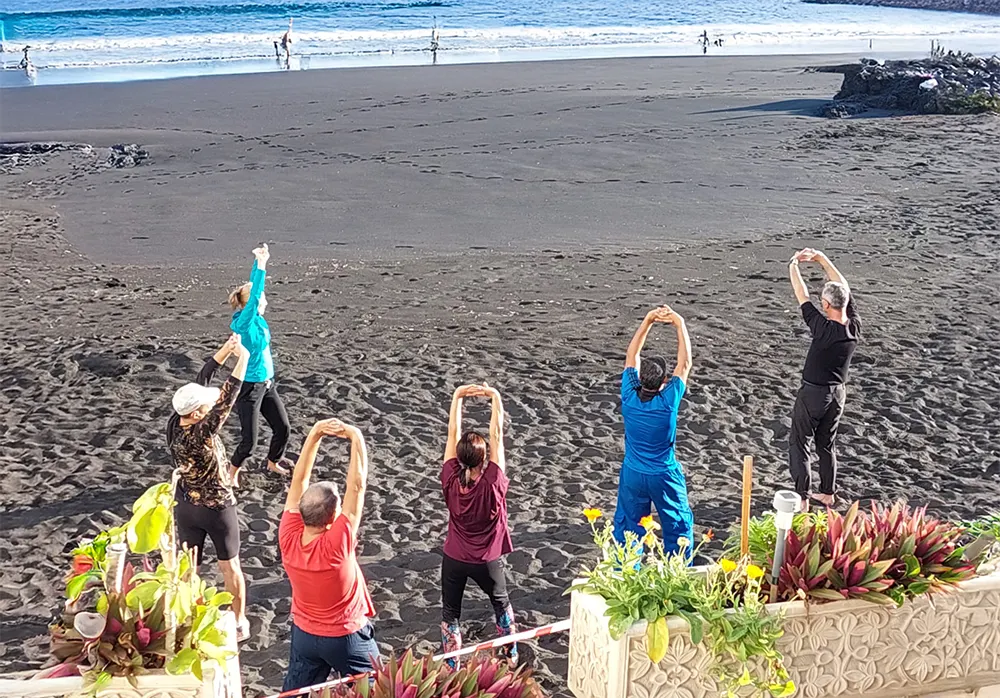
Structure of the Basic Course
Preparatory practices (6 practices)
With these practices, we do not begin by learning — we begin by shifting.
The body and the nervous system are prepared for the quality of perception on which Ningjing is built.
A further purpose of these practices is to activate the meridian system and to awaken subtle perception.
Practices:
Greeting, Opening the Energy Pathways, Shaking and Arm Swinging, Grounding, Safe Space, Time Practice
Intensive wai dan practices (6 practices)
For each of the three dantiens, you receive two practices — one Yin and one Yang.
These strengthen the dantiens and initiate the development of a coordinated energetic connection between them.
Through the spine, these practices reorganise the entire body and establish the stability required for later internal work.
Practices:
Awakening the Source – Lower Abdominal Breathing Massage
Transforming Disruptive Energies – Heart Space Practice
Breathing Through Past and Future – Present Breath
Additional wai dan practices (2 practices)
These practices aim to create and harmonise the dynamic balance of Yin and Yang, and to increase overall energy levels.
Practices:
Qi Ball Transfer, Yin–Yang Ball Rotation
Nei dan practices (3 practices)
We continue with the three core nei dan foundational practices.
Alongside increasing qi, these involve deep, quiet internal energetic work.
Practices:
Tree Pose Standing Meditation, Small Heavenly Orbit – Fire Path, Energy Refinement
Closing practices (3 practices)
Through the closing practices, you learn how to distribute and balance the gathered and cultivated qi throughout the body.
These practices can also be used independently as a short sequence whenever you want to refresh yourself or gently reorganise your internal state.
Practices:
Harmonising Tapping, Healing Circle of the Five Phases, Ear Massage
reviews & feedback
What you may start to notice
- Breathing begins to return to its natural rhythm.
- The overloaded nervous system starts to settle.
- Attention becomes steadier and more collected.
- Stress becomes easier to handle.
- You become more open to joy.
- You begin to sense your inner processes and your surroundings more clearly.
- A deeper shift begins in your relationships.
As the system begins to harmonise, participants often notice positive changes in the body, as well as in mental and emotional functioning.
This is not a process of developing “special abilities.” It is a gradual reactivation of an inborn sensing capacity that has been dulled by overload and constant input.
And this is only the beginning. As practice deepens, balancing Yin opens more and more space not only in sensing, but in relationships too.
Less effort.
Less struggle.
More sensing.
More space.
how can you learn it?
There are two learning formats — the same content, in a different rhythm.
1. Intensive path — 3 days (27 hours)
You get a clear overview of the system in one focused process, begin your practice, and are given space for your own inner process to unfold.
We work in a small group, in person.
The 3 days give you a complete foundation structure — not just an experience, but a real foundation.
2. Integrative path — 2 months (32 hours)
This format builds week by week, allowing the practice to integrate more gradually into everyday life.
We work in a small group with in-person guidance and precise feedback.
This format is currently available in Puerto de la Cruz, Tenerife.
Both learning formats require in-person participation.
course prices
3-day intensive track
in Budapest or Tenerife:
EARLY BIRD PRICE: 240 Euro
NORMAL PRICE: 280 Euro
2-month INTEGRATED track
in Puerto de la Cruz, Tenerife:
PAY IN FULL: 280 Euro
2 INSTALMENTS: 2x150 Euro
How much practice do you need after the course?
Ningjing isn’t “knowledge” you put on a shelf. For it to unfold, regular practice matters.
Realistically, about 15 minutes a day, plus one longer practice each week, is enough to get things moving.
Not heroic effort – more like a consistent return.
Where to go after the Basic Course?
UPCOMING courses
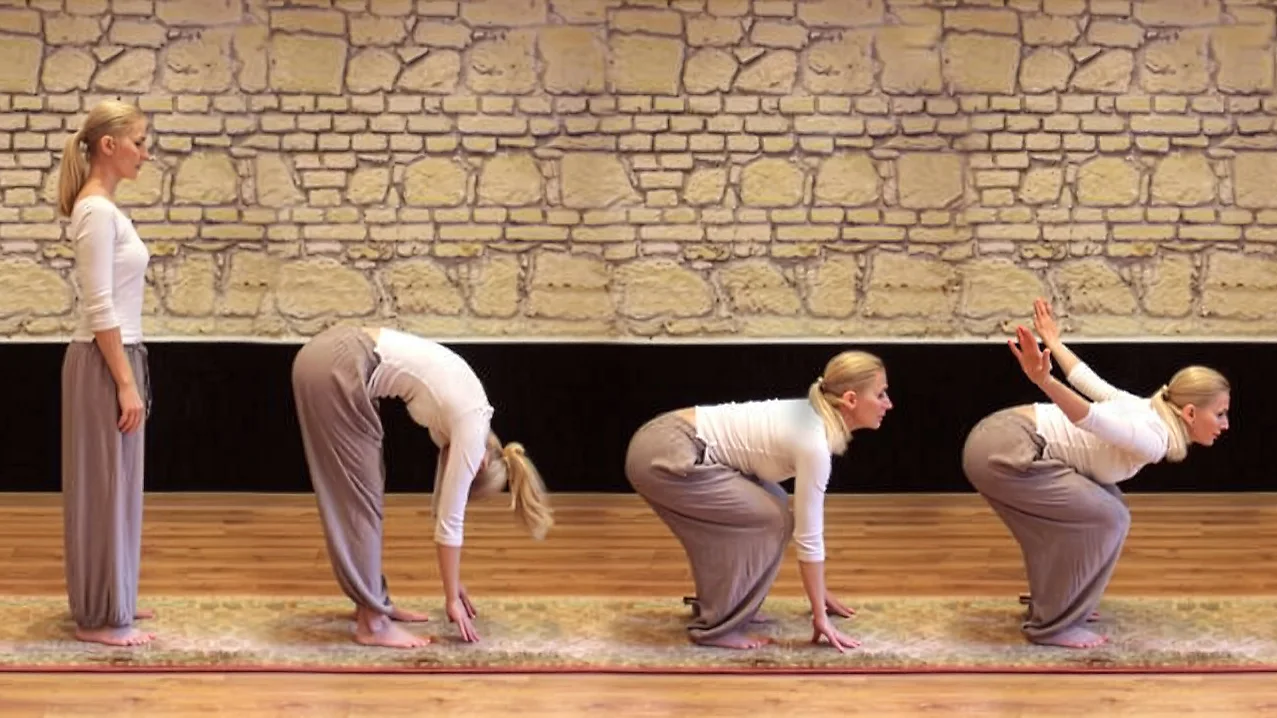
Ningjing Qigong Basic Course
2-month Integrated (2x2 hours/week)
- April 2026 — 17:00-19:00
- Puerto de la Cruz
- 2 times a week — 17:00-19:00 / or 1x4 hours

